Does Studying at a Top University Really Make a Difference in Landing a Job?
Rethinking Prestige in a Changing World of Work
For decades, students have believed that the name of their university defines their success. Parents celebrate Ivy League admissions as lifetime achievements, while counselors and recruiters often speak of rankings and brand value as if they alone determine destiny. But the modern job market tells a different story. The rules are changing—and fast. In an age of automation, global hiring, and skill-based evaluation, the prestige of your university has become only one piece of the puzzle. Today, employers seek more than a brand name—they seek people who can think, adapt, and deliver. For international students, this shift is revolutionary. Platforms like Flashfire are helping them compete and win, regardless of their university's reputation.
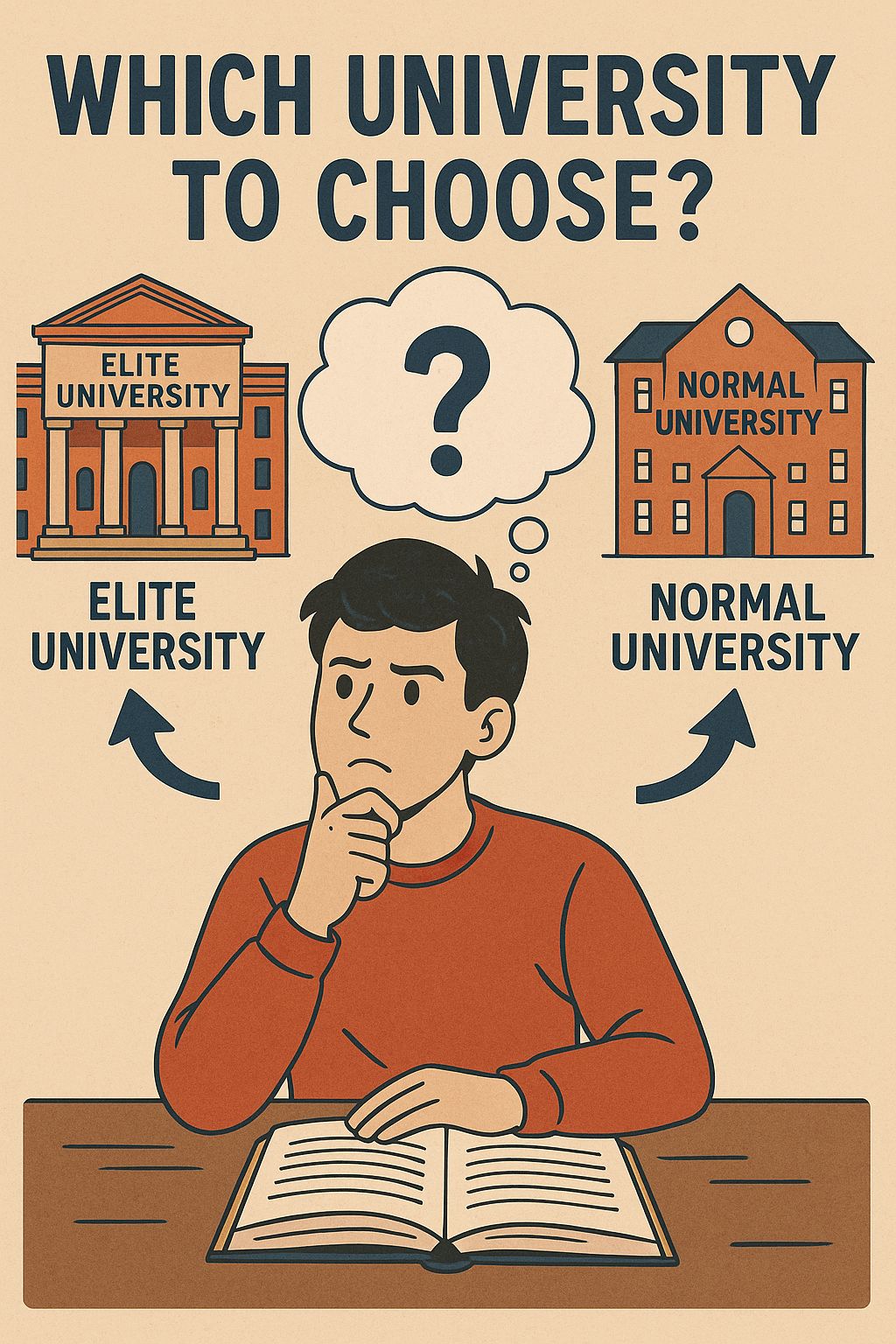
The Prestige Illusion
There's no denying that reputation can open doors. Seeing names like Stanford or Harvard on a résumé can spark instant recognition. Recruiters often interpret such credentials as proof of intelligence and drive. Yet, this effect is more about perception than ability. Studies show that many recruiters use top-university names as quick filters rather than meaningful indicators of competence. Once the interview begins, what truly matters is how well a candidate can solve problems, communicate ideas, and show readiness for the role.
"We hire people who can deliver results, not just those with impressive degrees." — Engineering Manager, Microsoft
The Rise of Skills Over Degrees
The world of hiring is undergoing a transformation. A degree is no longer the golden ticket it once was. In fields like technology, consulting, and analytics, recruiters now value hands-on ability far more than university prestige. In fact, a Deloitte Global Talent Report found that nearly half of all employers have removed degree requirements for some roles, focusing instead on demonstrable skills. Companies such as Google, Tesla, and IBM have built entire frameworks to assess candidates through project portfolios, certifications, and problem-solving challenges rather than the university listed at the top of their résumé.
Take Priya's story. An international student at the University of Illinois at Chicago, she faced countless rejections despite an excellent academic record. After joining Flashfire, her résumé was optimized for U.S. hiring systems and automatically matched with more than a thousand relevant job openings. Within weeks, she landed interviews with Deloitte and Capgemini. Her success wasn't because her university name gained new prestige—it was because she learned to present her skills strategically.
Building Networks Beyond Elite Circles
Prestigious universities often provide access to powerful alumni networks—connections that can make a difference early in a career. But networking is no longer the privilege of the few. With tools like LinkedIn and structured outreach systems within Flashfire, students can now build meaningful professional networks on their own. Take Aayush, a student from the University of Texas at Arlington. Through disciplined outreach, weekly connections, and virtual coffee chats, he built a network of more than a hundred professionals. One connection led to an internship referral that turned into a full-time offer. He didn't inherit opportunity; he created it. The new professional era rewards initiative, not inheritance.
What Employers Truly Value
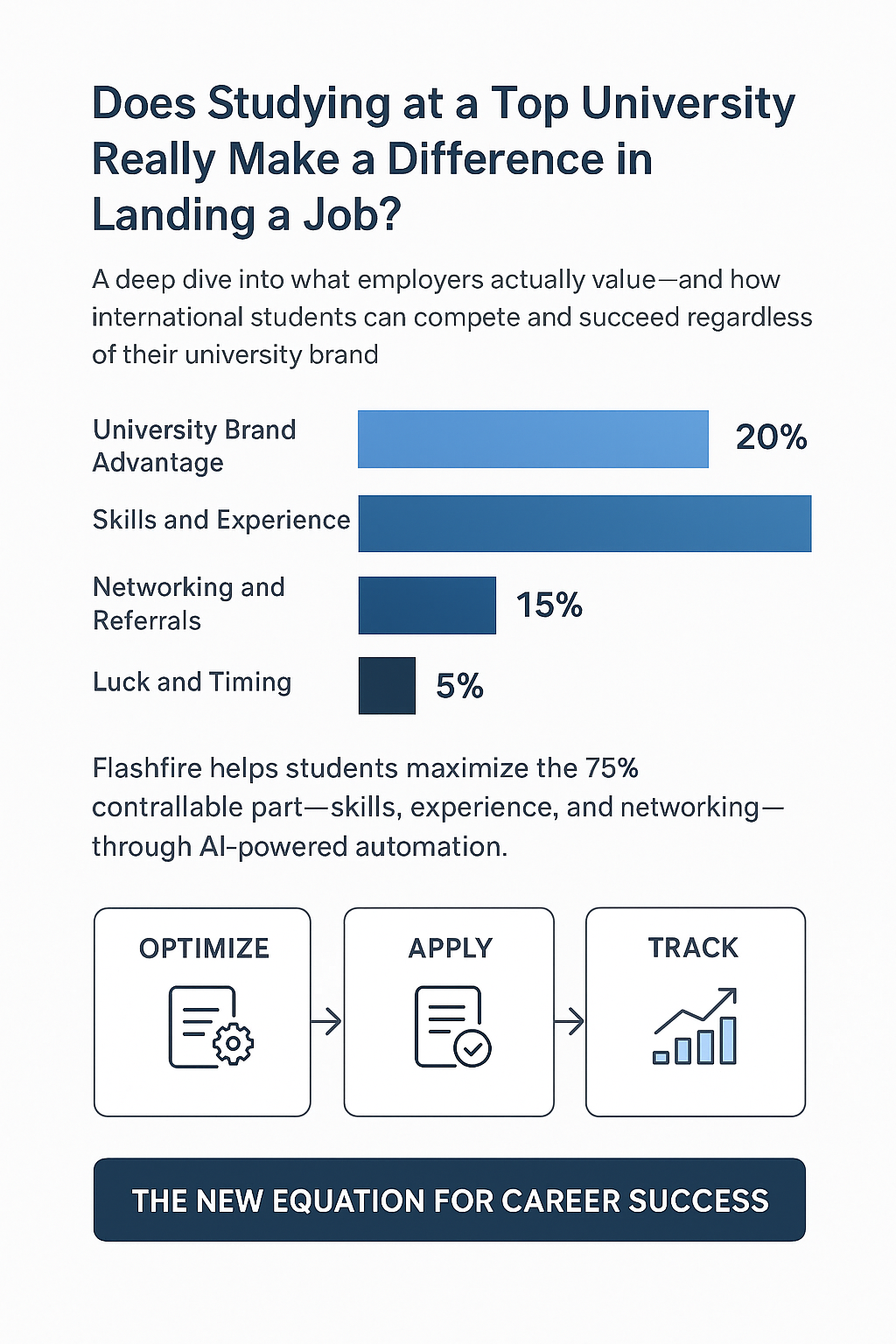
A 2024 NACE survey confirmed what many suspected: experience, technical skills, and soft skills dominate employer priorities, while university reputation trails far behind. Recruiters want people who can deliver from day one, not just those with prestigious credentials. Even in traditional sectors like consulting and finance, where legacy networks still matter, companies increasingly value candidates who demonstrate real-world ability through internships, projects, and teamwork.
The International Student Reality
In many countries, university prestige and employability are deeply intertwined. This mindset often leads international students to overestimate the importance of attending an elite institution abroad. In the U.S., however, employers evaluate candidates differently. They prioritize readiness, confidence, and practical capability over brand association. Two students with identical degrees—one from Columbia and one from Cincinnati—may experience completely different outcomes based on how effectively they apply, network, and present their value. Flashfire levels this playing field by automating the application process, optimizing résumés for keyword alignment, and identifying visa-friendly roles. The result: outcomes driven by skill and persistence, not just pedigree.
Redefining 'Top' in 2025
The meaning of "top university" has changed. Employers now define "top" not by research funding or faculty awards, but by job readiness and performance of graduates. That's why major companies increasingly hire from public universities like San José State, the University of Texas at Austin, and Northeastern University. The common thread among these institutions is not prestige—it's preparation. A student's journey today follows a new equation: University Brand opens the door, but Skill Development and Experience determine how far they go.
The Employer's Perspective
Hiring managers often review hundreds of applications for a single role. Automated systems (ATS) filter most résumés long before a human sees them. In such an environment, practical relevance outweighs reputation. A Yale graduate may boast theoretical mastery, but if a state university graduate can present tangible Power BI dashboards or client-ready solutions, the latter often prevails. Flashfire helps students navigate this reality by optimizing résumés for ATS readability, embedding job-specific keywords, and quantifying results—ensuring visibility regardless of where they studied.
The Balanced Truth
Prestige still has its place. It helps when applying to legacy-driven firms or when leveraging alumni for mentorship and referrals. But it loses power quickly when skills, adaptability, and initiative come into play. University prestige may open the first door; sustained performance keeps it open. In a skill-first era, success is increasingly brand-independent.
The Flashfire Framework
Flashfire is redefining how students from every background compete in the global job market. Through intelligent automation, it expands reach, tailors applications, and uses analytics to improve outcomes. Students who once struggled with visibility now apply efficiently to thousands of curated roles, focus their energy on interviews, and track every step with data-backed precision. Rohan, a computer science graduate from a midwestern university, went from 200 rejections to multiple offers after using Flashfire's system. His journey proves that process—not prestige—defines success.
The Future: Meritocracy in Motion
The hiring world is moving decisively toward meritocracy. Portfolios are replacing transcripts. Interview performance outweighs institutional affiliation. Continuous learning has become the ultimate credential. Platforms like Flashfire represent this transformation, helping students bridge skill, strategy, and opportunity. In this new reality, top universities may impress, but top performers succeed. The students who prepare smartly, apply strategically, and persist relentlessly will define the future of global careers.
Final Thought
A university name can shape your starting point, but it no longer determines your destination. Success today is driven by a powerful equation—Skills × Strategy × Persistence. Flashfire empowers every student to compete on equal footing, turning talent into opportunity and ambition into achievement. Because in the modern job market, it's not where you studied that defines your success—it's how ready you are to prove what you can do.
Ready to level the playing field? Visit flashfirejobs.com and start your success journey today.